

From Bystander to Upstander
A private workshop for the PSAI Board of Directors and invited volunteers.
Program Overview
This interactive workshop explores why and how to shift from being a bystander to becoming an upstander; someone who takes meaningful, constructive action when witnessing harmful or problematic behavior. Whether observing harassment or discrimination at work, noticing a colleague being bullied at a conference, or hearing a microaggression in a meeting, participants will learn practical strategies for responding effectively and safely.
Rather than relying on a single “speak up” approach, this program introduces five different options for intervening or offering support, recognizing that each situation calls for a tailored response. The session emphasizes flexibility, choice, and realistic action steps so participants leave with tools they can use right away.
About the Presenter
 Charmhee Kim is a cross-cultural trainer and ombuds with MWI. She leads remote workshops on topics including Finding Alignment on Different Perspectives, Interactive Listening Skills, From Bystander to Upstander, How to Have Productive Difficult Conversations at Work, and more. She was an ombuds for 15 years at McKinsey & Company, a global management consultancy, addressing workplace conflicts, career development concerns, and other challenges. She has been an active member of the International Ombuds Association (IOA) since 2007 and was trained in its Foundations of Organizational Ombudsman Practice Course, which she later taught as faculty. Charmhee served on the IOA Board of Directors and co-chaired its Global Marketing Task Force. Prior to entering the ombuds profession, Charmhee worked as a management consultant, investment banker, and public affairs specialist with the United Nations. She holds an MBA from the University of Pennsylvania’s Wharton School and an MA from Johns Hopkins University’s School of Advanced International Studies. Charmhee is trilingual in English, Korean, and Mandarin Chinese.
Workshop Resources
Workshop Slides
Recommended Reading
The articles, books, and videos below are referenced in our training and provide practical frameworks, tools, and real-world strategies that employees can use to strengthen collaboration, manage conflict constructively, and create a more supportive workplace culture.
Articles
- How to Tell Your Story if You are a Target of Bullying – MWI
- This article provides guidance on how to articulate your experience if you are a target of bullying, offering strategies for effective communication and self-advocacy.
- Let’s Resolve This… – Sunshine Yen
- This article explores practical approaches to conflict resolution, offering tips and techniques to resolve disputes effectively and maintain healthy relationships.
- How Bullying Manifests at Work and How to Stop It – Ludmila Praslova et al.
- This article examines various forms of workplace bullying and provides actionable strategies for preventing and addressing such behavior to create a safer work environment.
- Checklist For Responding to Rudeness – MWI
- A practical checklist that offers steps for responding to rude behavior in the workplace, focusing on maintaining professionalism while addressing the issue.
- Delivering Effective Feedback – MWI
- This article outlines techniques for giving constructive feedback in a clear, actionable, and supportive way. It emphasizes the importance of timing, framing the message with care, and focusing on behaviors and outcomes rather than personal criticism.
Tools
- Drafting and Perhaps Sending a Private Letter to a Person Who has Harassed or Offended You – Mary Rowe
- This tool provides a framework for drafting a personal letter to someone who has harassed or offended you, focusing on clear communication and the potential benefits of addressing the issue privately.
- Implicit Bias Test – Harvard’s Project Implicit
- An online tool designed to help individuals uncover their unconscious biases, providing insights that can lead to more equitable behavior in the workplace.
- Difficult Conversations Checklist – MWI
- This tool offers a framework for handling tough discussions. It emphasizes goal-setting, active listening, and empathy to help navigate conflict and achieve positive outcomes.
Books
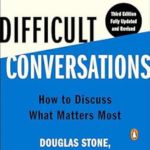 by Douglas Stone, Bruce Patton, Sheila Heen
Overview: Explores why tough conversations are so challenging and offers a step-by-step framework for approaching them with clarity, curiosity, and empathy.
Key takeaway for employees: Use these tools to address sensitive workplace issues constructively, whether resolving conflicts with colleagues, navigating client concerns, or giving/receiving feedback without defensiveness.
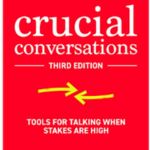 by Kerry Patterson, Joseph Grenny, Ron McMillan, & Al Switzler
Overview: Provides practical strategies for handling high-stakes, emotionally charged discussions where opinions differ.
Key takeaway for employees: Learn to stay calm under pressure, maintain strong working relationships, and find shared understanding, essential for teamwork and client negotiations.
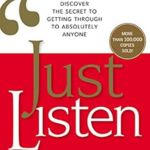 by Mark Goulston
Overview: Demonstrates the power of deep listening to reduce defensiveness and build influence by making others feel truly heard.
Key takeaway for employees: Strengthen trust, improve collaboration, and de-escalate tensions by listening in a way that makes colleagues and clients feel understood.
by Marshall Rosenberg and Deepak Chopra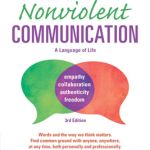
Overview: Introduces a communication process based on empathy, clarity, and mutual respect to express needs without blame or judgment.
Key takeaway for employees: Use NVC to reduce misunderstandings, improve collaboration, and give feedback in a way that strengthens relationships at work and with clients.
Videos
- Creating a Speak-Up Culture – Leadership NOW with Dan Pontefract – Stephen Shedletzky
- Active Listening – Optimal Lifestyle
Not every article, book, or video needs to be viewed/read at once. Start with the one that speaks most to your current challenges or goals, and put its strategies into practice. Even one new approach can make a meaningful difference in moving from Bystander to Upstander.
For more information, contact MWI’s Director of Ombuds and Mediation Services, Josh Hoch, at 617-895-4028.