

Navigating Change in the Age of Modernization: Leading Through Emotion
By Vik Kapoor
Change is inherently emotional. We may experience loss, or a feeling that our needs are not being met. We may be floundering along amidst thoughts of uncertainty, confusion, or betrayal. This leads to the range of emotions associated with anger – whether it is irritation, frustration, or rage, as well as fear, anxiety, hopelessness, and so on. Many emotions can be smashed together with little capacity for discernment.
Here is how that range of emotion often shows up in organizations.
The Change Curve
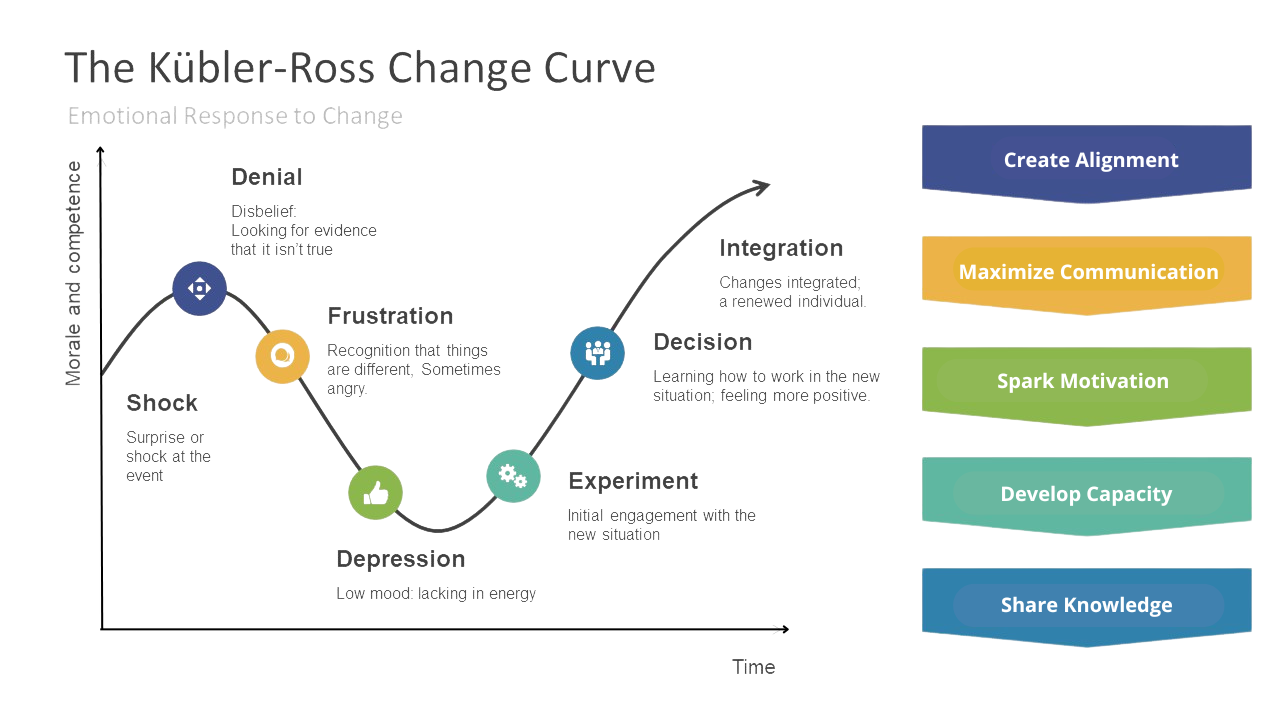
Adapted from the psychology of grief, the Change Curve (below) charts the emotional stages of disruption: shock, denial, frustration, depression, exploration, acceptance, and growth. Leaders often misinterpret frustration as insubordination. Anger is in fact a good disguise for grief. The point is to get more curious about where your people might be along the curve, and then is our response commensurate with the need.
How might you apply this framework to a hypothetical?
Workplace Conflict Example:
A new leader of a historically very productive unit is looking at data differently and asking each team to present its logic on why the head count is the way it is. People feel exposed. They withdraw, procrastinate, or push back.
What do we do?
Leaders who normalize the emotional dip — instead of cutting it down — help people move faster toward acceptance. Emotion acknowledged is emotion metabolized.
Some go through denial and frustration periods before finally coming along and accepting the new reality. A good leader notices the ebb and flow of this, honors the humanity of their people, and overcommunicates at key times to ensure the best possible morale and a sense of genuine support.
When leaders can engage feelings, employees no longer have to act them out.
Sample Manager’s Script for Announcing Change Calmly
“There are some updates to how we’ll be working in the coming months. These changes help us do our work better as we continue growing. It’s normal to feel uncertain right now. Here’s what we know… and here’s what we don’t know yet, plus when we expect to learn more. Here are ways you can contribute to this transition. People move through change at different speeds and we want to support you wherever you are in the process. Your commitment to this is admirable. What questions do you have? No question is too small. Also feel free to use our established confidential avenues for raising your concerns.”
Weekly updates — even with nothing new — dramatically reduce rumor-driven anxiety.
Try this:
- Reflect on a change that you are going through right now. It can be related to work or your personal life.
- Where are you on the Change Curve, and what if anything do you want to do about that?
- Can you commit to communicating more about this change to those who might benefit?
This week we invited you to double down on managing emotions during change. This aims to add to your continually-growing toolkit of frameworks to navigate the many conflicts associated with change. See you next week for our final segment that brings it all together, where you will also receive a summary decision table to explore these tools in more detail. Join us for Part IV on leaning into change.
Change is inevitable, but how organizations navigate it determines what comes next. At MWI, we help people and organizations turn challenges into opportunities. Learn more about our services at mwi.org.