

Why We’re So Sure, and So Often Wrong
In everyday work interactions, people often move quickly from what happened to what they think it means. Sometimes that interpretation is accurate. Other times, it is shaped by assumptions they did not realize they were making.
Ombuds Tip #1: The Ladder of Inference
Have a question or concern?
Ombuds Team Members are available as a confidential, informal, impartial, and independent resource for all DAVIS employees.
Contact an OmbudsWhat Is the Ladder of Inference?
The Ladder of Inference describes how people move from observable facts to conclusions and actions. This process often happens quickly and automatically.
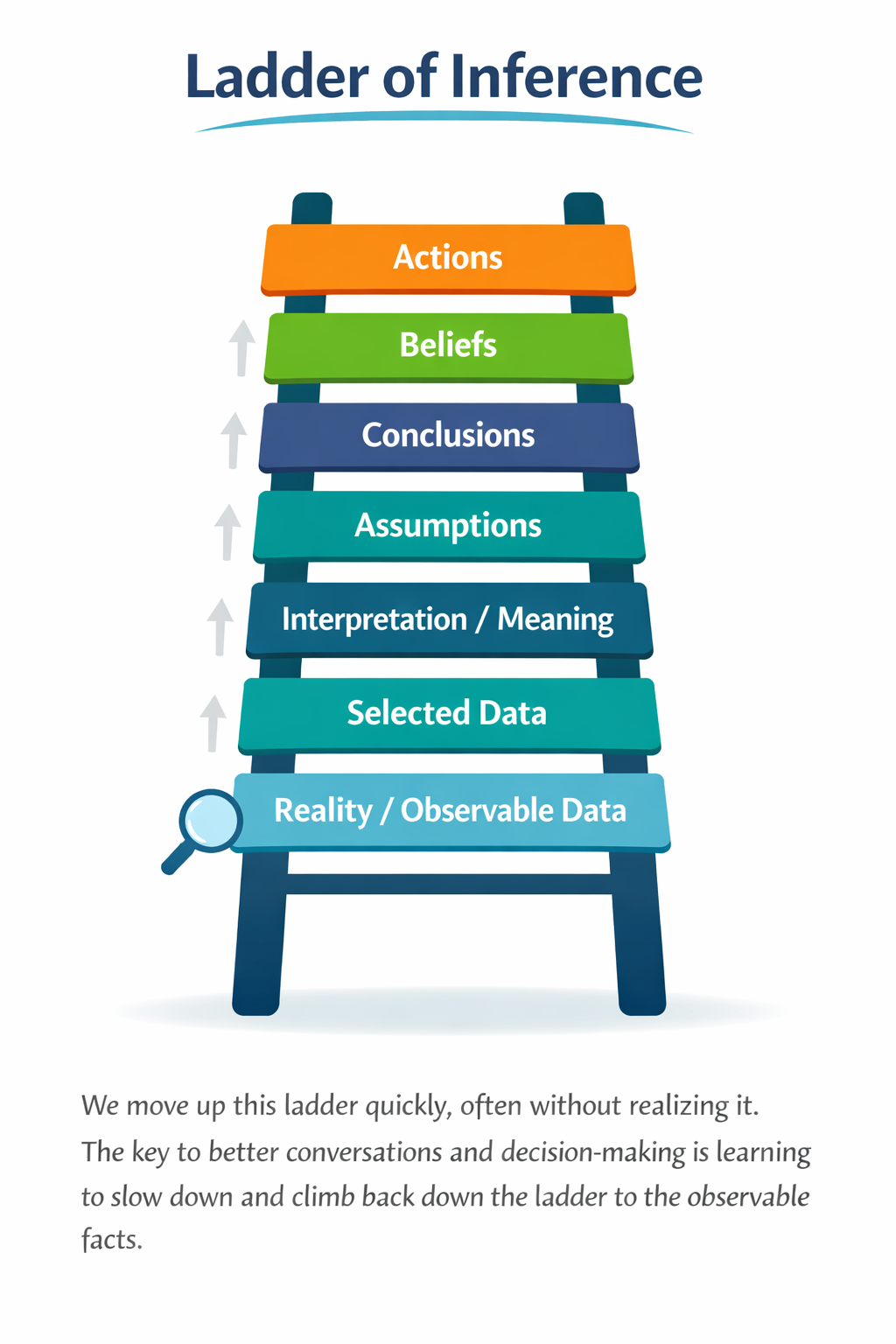
We begin with what we see or hear, then gradually interpret and respond. Each step moves us further from the original facts.
- Observable data: what actually happened
- Selected data: what we notice or focus on
- Meaning: the interpretation we assign
- Assumptions: what we believe must be true
- Conclusions: the story we form
- Actions: how we respond
Because this process happens quickly, people sometimes react to their interpretation rather than the original facts.
A Short Explanation of the Ladder
This short video shows how quickly people can climb the Ladder of Inference, and how returning to the observable facts can lead to clearer conversations and better decisions.
A Common Workplace Example
The Ladder of Inference becomes easier to recognize when applied to a familiar workplace moment.
A coworker walks past you in the hallway and does not say hello.
How the ladder can show up
You may notice the missed greeting, interpret it as intentional, assume the person is upset, and begin acting as though there is a problem in the relationship.
But there may be other explanations. The person may have been distracted, preoccupied, or simply did not see you.
An Email and Feedback Example
Email and feedback are two common places where people can move from facts to assumptions very quickly.
You send a colleague a draft and ask for feedback. They reply: “This needs work.” There is no greeting, no explanation, and no context.
Climbing back down the ladder
Before reacting, pause and return to what you actually know. Other explanations may be just as likely:
- The person was rushing between meetings.
- They intended to be direct, not dismissive.
- They assumed you wanted brief feedback first.
- They had useful input, but did not communicate it well in that moment.
A more effective next step might be: “Thanks. Can you tell me which parts need the most attention?”
Pause, Check, Ask
When a situation feels frustrating or unclear, the Ladder of Inference can serve as a useful pause point. Before reacting, take a moment to step back down the ladder.
Slow down your reaction. Notice when you are moving quickly from what happened to what you believe it means.
Ask yourself what you actually observed and what assumptions you might be making about the situation.
If something is unclear, ask a clarifying question instead of reacting to your interpretation.
Many workplace misunderstandings happen not because people disagree about the facts, but because they draw different conclusions from the same situation.
Need a sounding board?
Workplace situations are not always straightforward. Sometimes it helps to talk through what is happening, consider different perspectives, and explore your options before deciding what to do next.
Your DAVIS Ombuds Team is available as a confidential, informal, impartial, and independent resource. Nnena and Josh can help you think through a situation, explore options, or prepare for a conversation.